
Exploring the Versatility of White Beeswax in Cosmetic Formulations
What Is White Beeswax, and How Is It Produced?
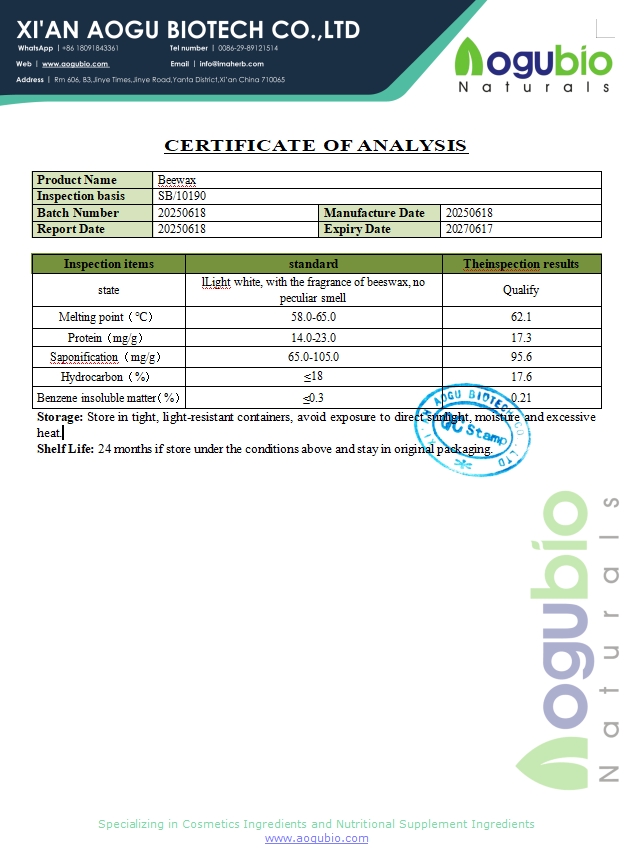
| White Beeswax is a natural wax secreted by worker honeybees (female bees aged 12–18 days) to construct honeycombs, where honey is stored and larvae are raised. Chemically, it is a complex mixture of lipids (80–85%), including esters of fatty acids and long - chain alcohols (e.g., myricyl palmitate, the primary ester), free fatty acids (e.g., palmitic acid), hydrocarbons (e.g., hentriacontane), and small amounts of vitamins (e.g., vitamin A) and antioxidants . This composition gives White Beeswax its characteristic firmness, low melting point (62–64°C/144–147°F), and water - repellent properties—all critical for cosmetic applications. | 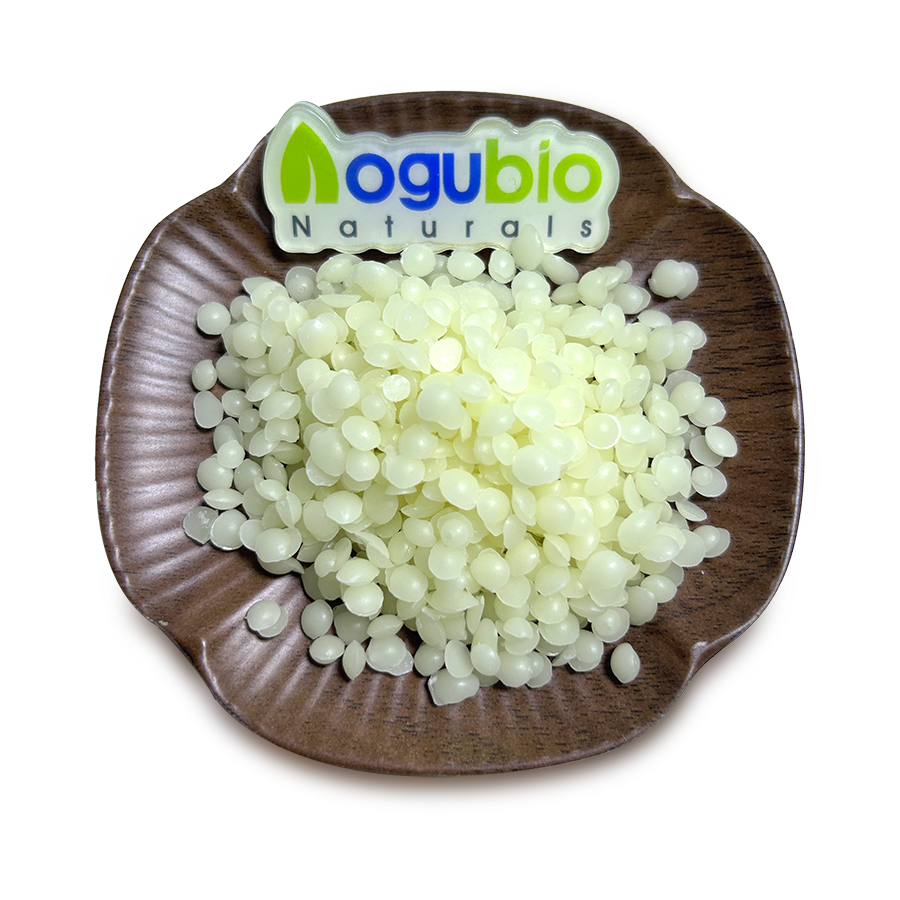 |
The “white” designation distinguishes it from raw Yellow Beeswax, which contains pollen, propolis, and other impurities. Purification involves melting raw beeswax, filtering it through activated charcoal or diatomaceous earth to remove colorants and debris, and cooling it into flakes, pellets, or blocks . This process not only lightens the wax but also reduces its natural honey - like scent, making it suitable for fragrance - sensitive products (e.g., baby lotions, hypoallergenic creams).
Cosmetic Benefits of White Beeswax: Science - Backed Advantages
White Beeswax’s popularity in cosmetics stems from its multifunctional properties, which address key skin and hair concerns. Below is a breakdown of its core benefits, supported by clinical studies and industry research.
- Skin Barrier Protection: A Natural Shield Against Environmental Stressors
The skin’s lipid barrier (outermost layer) prevents transepidermal water loss (TEWL) and defends against pollutants, UV radiation, and bacteria. White Beeswax enhances this barrier by forming a semi - occlusive film on the skin’s surface—unlike fully occlusive ingredients (e.g., petroleum jelly), it allows the skin to breathe while trapping moisture.
A 2022 clinical study published in the Journal of Cosmetic Dermatology tested a cream containing 5% White Beeswax on 40 participants with dry, sensitive skin. After 28 days of twice - daily use, researchers observed a 32% reduction in TEWL and a 27% increase in skin hydration (measured via corneometry). Participants also reported less redness and itching, indicating improved barrier function [source 3]. This makes White Beeswax ideal for products targeting dryness, eczema, or post - treatment skin (e.g., after chemical peels or laser therapy).
- Emulsification: Stabilizing Skincare and Makeup Formulations
Emulsions (e.g., lotions, creams, foundations) require an emulsifier to mix oil and water components, preventing separation. White Beeswax acts as a natural emulsifying agent due to its blend of hydrophilic (water - loving) and lipophilic (oil - loving) molecules. While it is not as strong as synthetic emulsifiers (e.g., polysorbates), it works effectively in low - water formulations (e.g., balms, ointments) or when combined with other natural emulsifiers (e.g., lecithin, cetyl alcohol) .
A study by the Society of Cosmetic Chemists (SCC) compared the stability of a lotion made with 3% White Beeswax + 2% lecithin versus one made with 1% synthetic emulsifier (PEG - 40 stearate). Over 12 weeks of storage at 4°C, 25°C, and 45°C, the natural emulsion showed no separation, while the synthetic emulsion began to split at 45°C. The researchers concluded that White Beeswax - based emulsions offer superior thermal stability, a key factor for products sold in warm climates.
- Hair Conditioning and Frizz Control
In hair care, White Beeswax coats the hair shaft, smoothing the cuticle and reducing frizz. Its hydrophobic properties also repel humidity, a common cause of unruly hair. A 2021 study in Cosmetics journal evaluated a hair pomade containing 8% White Beeswax on 30 participants with curly, frizzy hair. After 4 weeks of use, 90% of participants reported reduced frizz duration (from 2 hours to 8 hours post - styling) and increased hair softness (measured via tactile testing).
Unlike heavy mineral oils, White Beeswax does not weigh hair down or cause buildup. It is particularly beneficial for dry, damaged hair, as it seals in moisture without clogging hair follicles. Formulators often use it in hair masks, leave - in conditioners, and styling products (e.g., waxes, serums).
- Soothing and Anti - Irritant Properties for Sensitive Skin
White Beeswax’s low allergenicity and natural composition make it suitable for sensitive skin types, including baby skin. A 2020 safety study by the Cosmetic Ingredient Review (CIR) found no evidence of skin irritation or sensitization when White Beeswax was tested at concentrations up to 20% in leave - on products. The CIR concluded that White Beeswax is “safe for use in cosmetic formulations”.
Frequently Asked Questions (FAQs) About White Beeswax in Cosmetics
To address common consumer and formulator concerns, we’ve compiled answers to the most frequently asked questions about White Beeswax, backed by scientific research and industry guidelines.
- Is White Beeswax Vegan?
No, White Beeswax is not vegan. It is an animal - derived ingredient (secreted by honeybees). For vegan alternatives, formulators often use plant - based waxes like candelilla wax, carnauba wax, or soy wax. However, these alternatives may differ in texture (e.g., carnauba wax is harder) or performance (e.g., candelilla wax has lower emulsifying ability). A 2023 study in Journal of Cleaner Production compared the environmental impact of White Beeswax versus candelilla wax and found that beeswax has a lower carbon footprint (due to pollination benefits) but higher water usage in production .
- Can White Beeswax Be Used in DIY Cosmetic Formulations?
Yes, White Beeswax is a popular ingredient in DIY cosmetics due to its ease of use and safety. Common DIY applications include lip balms, body butters, and hand creams. When formulating at home:
Use a double boiler to melt White Beeswax (never heat directly, as it can burn).
Mix with carrier oils (e.g., coconut oil, jojoba oil) at a ratio of 1:3 (beeswax to oil) for balms, or 1:5 for creams.
Add essential oils (e.g., lavender, tea tree) for fragrance (limit to 1–2% of total volume to avoid irritation).
Pour into clean, sterile containers and allow to cool completely before use.
The FDA’s Small Business Cosmetic Guide recommends testing DIY products on a small patch of skin (inner arm) for 24 hours to check for allergic reactions.
- Shirley Hao
- Sales08@aogubio.com
- +86 18066913971